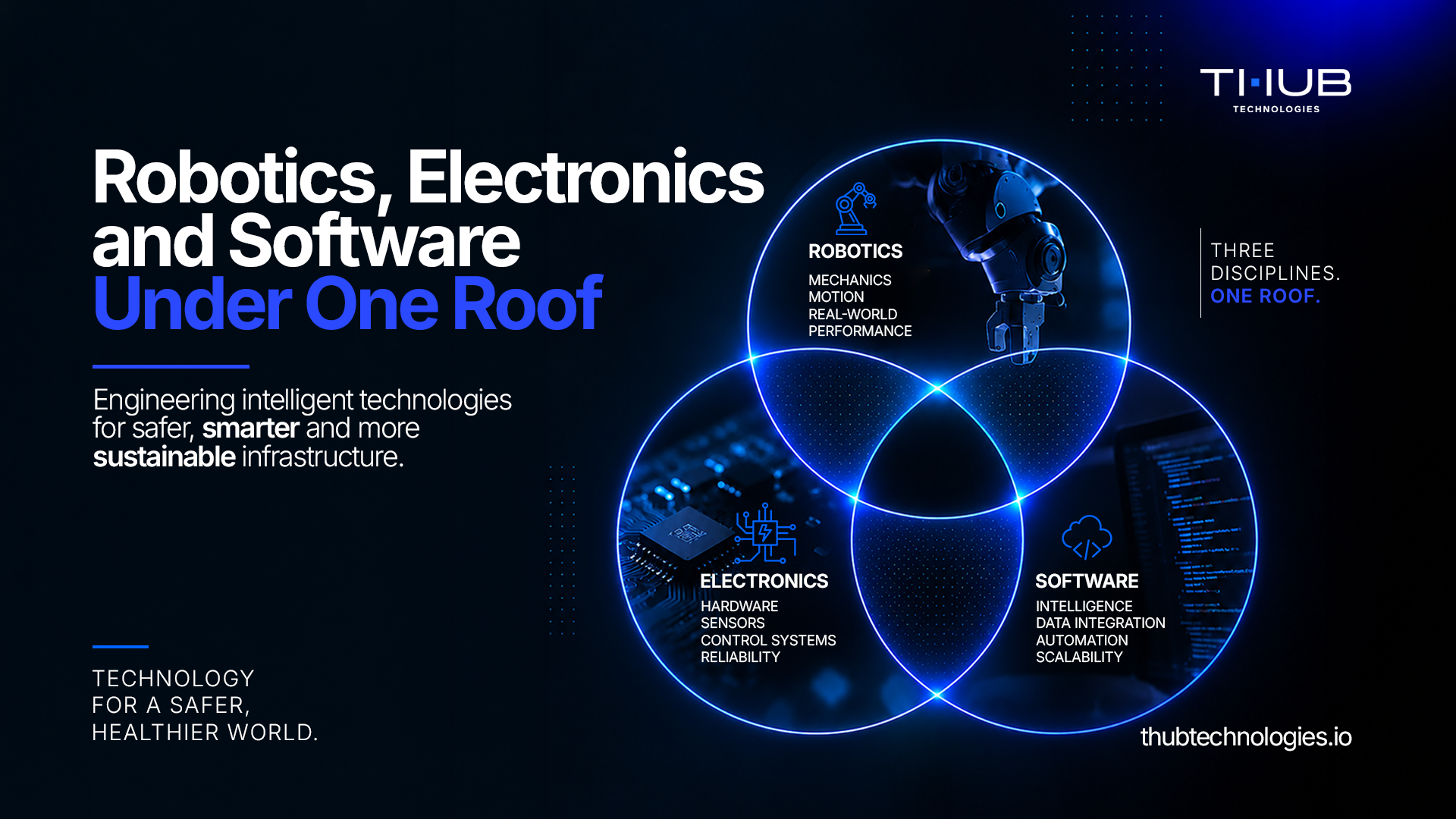
Robotics, Electronics and Software Under One Roof
Today's most meaningful technologies rarely come from a single discipline. A robotic system depends on the electronics that power and control it, and both depend on software that interprets data and makes decisions. When these elements are developed separately, the result can be a patchwork of components that never quite work as one. At THUB Technologies, we believe the strongest solutions come from bringing robotics, electronics and software together under one roof, from the earliest concept to the finished system.
Why Integration Matters in Modern Technology Development
The Limits of Fragmented Development
In many technology projects, hardware, electronics and software are designed by different teams, or even different organisations, each working to its own specifications. This approach can work for simple products. For complex systems such as smart buildings, automated facilities or robotic platforms, however, it often creates friction. Interfaces need to be reconciled, assumptions have to be revisited, and small incompatibilities can become significant obstacles during deployment.
A Systems-Level Perspective
An integrated approach treats a solution as a single system rather than a collection of parts. Mechanical design, circuit architecture and software logic are considered together, so that decisions in one area account for their effects in the others. This perspective helps engineering teams anticipate challenges earlier and design solutions that behave predictably in real-world conditions.
Three Disciplines, One Engineering Approach
Robotics: Bringing Intelligence into Motion
Robotic systems translate digital instructions into physical action. Whether a system is monitoring an environment, performing repetitive tasks or supporting maintenance operations, its effectiveness depends on precise coordination between sensors, actuators and control logic. Developing robotics alongside electronics and software allows these interactions to be refined as a whole, rather than adjusted after the fact.
Electronics: The Foundation of Reliable Systems
Electronics form the nervous system of any intelligent device. Power management, sensing, communication and control all rely on well-designed hardware. When electronic design is carried out in close collaboration with robotics and software teams, it can be tailored to the specific demands of each application, which supports stability, efficiency and long-term reliability.
Software: Turning Data into Decisions
Software brings the system to life. It processes sensor data, coordinates movement, enables automation and, increasingly, draws on artificial intelligence to support smarter decisions. In an integrated environment, software is developed with a clear understanding of the hardware it runs on, which makes it easier to optimise performance and respond to changing operational needs.
The Value of an In-House R&D Model
Faster Iteration and Closer Collaboration
Keeping core disciplines within one R&D structure shortens the distance between an idea and its validation. Engineers can test, review and refine prototypes collaboratively, without the delays that often come with coordinating across external parties. This supports a more agile development cycle and a deeper shared understanding of each project.
Safety and Reliability by Design
When a single organisation is responsible for the complete system, safety and reliability can be built into the design from the outset rather than added later. Integrated development makes it easier to trace how components interact, identify potential risks and put appropriate safeguards in place at every level.
Sustainability Through Efficiency
Sustainable technology is not only about materials or energy sources. It also depends on how intelligently a system uses resources. Coordinated design across robotics, electronics and software can help reduce unnecessary energy consumption, extend the useful life of equipment and support more efficient building and facility management.
Applying Integrated Engineering to Smart Infrastructure
Smart cities and intelligent buildings are, by nature, complex ecosystems. They combine physical infrastructure, connected devices and data platforms, all of which must operate together reliably. For facility managers and decision-makers, this means solutions need to be dependable, adaptable and capable of generating meaningful insights.
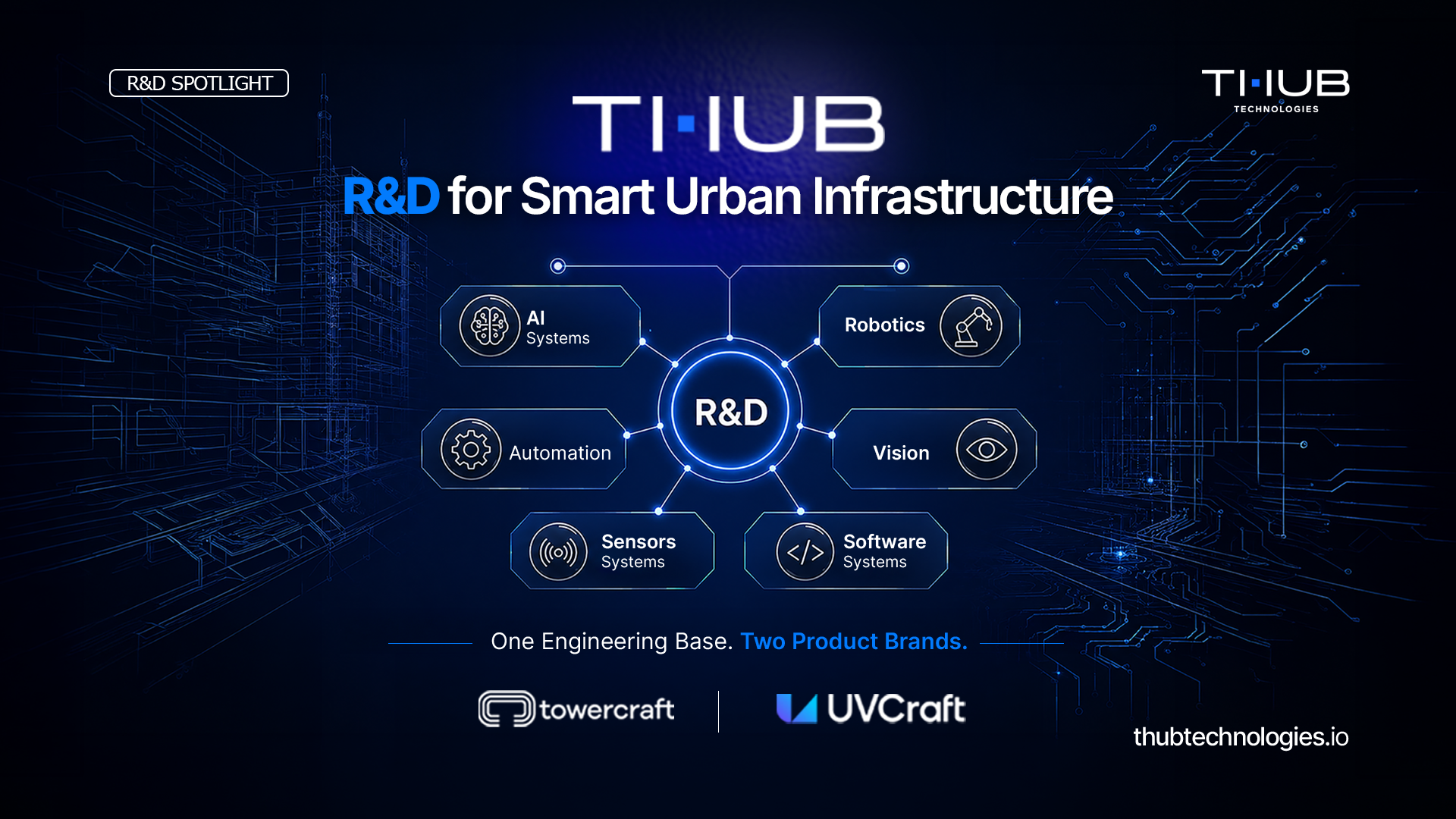
THUB Technologies applies its multidisciplinary approach to areas such as smart city infrastructure, automation, robotic systems, AI-supported technologies and sustainable building management. The company's product brands, including Towercraft and UVCraft, reflect this philosophy of developing technology through a unified engineering process. By understanding how hardware, electronics and software interact, THUB Technologies aims to create solutions that fit naturally into existing environments while supporting data-driven decision-making.
Looking Ahead
As infrastructure becomes more connected and automated, the boundaries between engineering disciplines will continue to blur. Organisations that can think across these boundaries will be better placed to deliver technology that is secure, efficient and ready for future demands. Integration is no longer simply an operational advantage; it is becoming a foundation for responsible innovation.
Conclusion
Bringing robotics, electronics and software under one roof is more than an organisational choice. It is a way of thinking about technology as a coherent whole, where every component is designed with the full system in mind. For THUB Technologies, this integrated R&D approach underpins a long-term commitment to innovation, safety, sustainability and intelligent infrastructure. As cities, buildings and industries evolve, THUB Technologies will continue to explore how unified engineering can help shape a smarter and more resilient built environment.